Research
Santiago believes that there is a continuum between health and disease. If we are capable of measuring this continuum, we can revolutionize early disease detection, deepen our understanding of underlying mechanisms, and develop more precise interventions.
Santiago works with a multidisciplinary research team at the intersection of biophysical chemistry, mathematical and statistical modeling, and pathophysiology. Through his diverse research projects, Santiago and his team leverage their interdisciplinary perspective to provide innovative solutions to measure physical constants of biochemical reactions, develop cutting-edge diagnostic tools, and design more effective therapeutic strategies.
Principles of Enzyme and Biochemical Kinetics
Project-summary
We develop standard-based approaches for measuring enzyme kinetic parameters and deriving rate equations that distinguish the mechanisms of enzyme-catalyzed and other biochemical reactions.

We combine chemical kinetics with mathematical, computational, and statistical methods to develop standard-based approaches, which can distinguish molecular mechanisms under various experimental conditions.
Our research focuses on deriving mathematical approximations of rate law equations that govern the progress curves of enzyme-catalyzed and other biochemical reactions. This involves implementing advanced mathematical techniques for scaling and perturbation analysis. After deriving these approximations, we assess their effectiveness in modeling progress curves and estimating kinetic parameters under different experimental conditions. In addition, we develop and implement algorithms to accurately estimate kinetic parameters directly from progress curve experiments.
Our work in enzyme and biochemical kinetics has broad implications for understanding the fundamental principles of biochemical reactions and can inform the development of clinical test, novel therapeutics and biotechnological applications.
Developing Standards for Reporting Enzymology Data
Project-summary
We are developing standards for data reporting enzyme functional data with the aim to improve the quality of data published in the scientific literature.

We are developing Standards for REporting ENzymology DAta (STRENDA) in collaboration with an international committee sponsored by the Beilstein-Institut.
The STRENDA Guidelines are developed through extensive interactions with the biochemistry community to define the minimum information that is needed to correctly describe assay conditions (List Level 1A) and enzyme activity data (List Level 1B). STRENDA aims to ensure that data sets are complete and validated, allowing scientists to review, reuse and verify them. The emphasis is on providing useful and reliable information.
STRENDA Dabatabase
Standards for REporting ENzymology DAta DataBase (STRENDA DB) is a validation and storage system for enzyme function data that incorporates the STRENDA Guidelines. It provides authors who are preparing a manuscript with a user-friendly, web-based service that checks automatically enzymology data sets entered in the submission form that they are complete and valid before they are submitted as part of a publication to a journal.
EnzymeML: An Open Standard for Sharing and Standardizing Enzyme Kinetics Data
Project-summary
The EnzymeML language is an open standard based on the XML markup language.
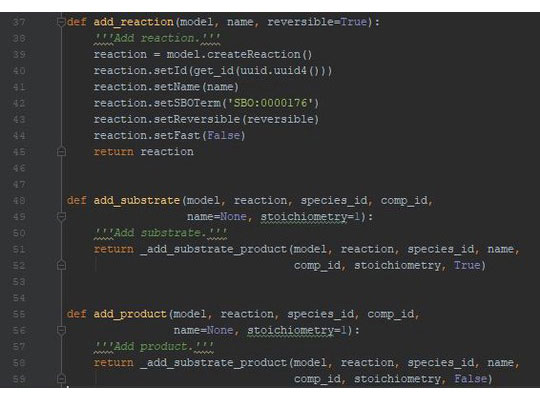
EnzymeML is a free, open-standard XML-based markup interchange format for standardizing the monitoring and exchange of enzyme kinetic data. It allows scientists to share experimental protocols, results, and kinetic data even if they are using different instruments, electronic laboratory notebooks, or databases.
EnzymeML follows the FAIR Principles (Findable, Accessible, Interoperable, Reusable), ensuring data is easily located, accessed, combined, and reused. It is compatible with the Systems Biology Markup Language, and is supported by the STRENDA Commission. The format continues to be evolved and expanded by an international community.
Development is jointly led by Juergen Pleiss, Frank T. Bergmann, and Santiago Schnell. It is available in GitHub.
By promoting data standardization and accessibility, EnzymeML aims to accelerate research in enzyme kinetics and biocatalysis, streamline collaborations, and ultimately contribute to advancements in drug discovery,biotechnology, and our understanding of biological and chemical systems.
Measuring and Improving Research University Performance
Project-summary
We are developing new metrics and models to measure and improve performance of scientists, research universities, and academic policies.

Modern research universities are complex ecosystems, requiring a deep understanding of their inner workings to make informed policy and administrative decisions. Scientometrics, the quantitative study of scientific research, and economic modeling provide the tools to achieve this.
Our goal is to develop models that leverage large-scale scientometric and economic data to optimize the use of limited resources, ultimately maximizing research output and societal impact. We investigate the ongoing cost-benefit decisions academic institutions make as they compete for resources and reputation, as well as how scientists respond to incentives and costs related to research funding, scientific quality, and reputation.
By understanding these dynamics, we aim to inform strategies that enhance the efficiency and effectiveness of research universities, foster a thriving academic environment, and ultimately contribute to the advancement of knowledge and innovation.
